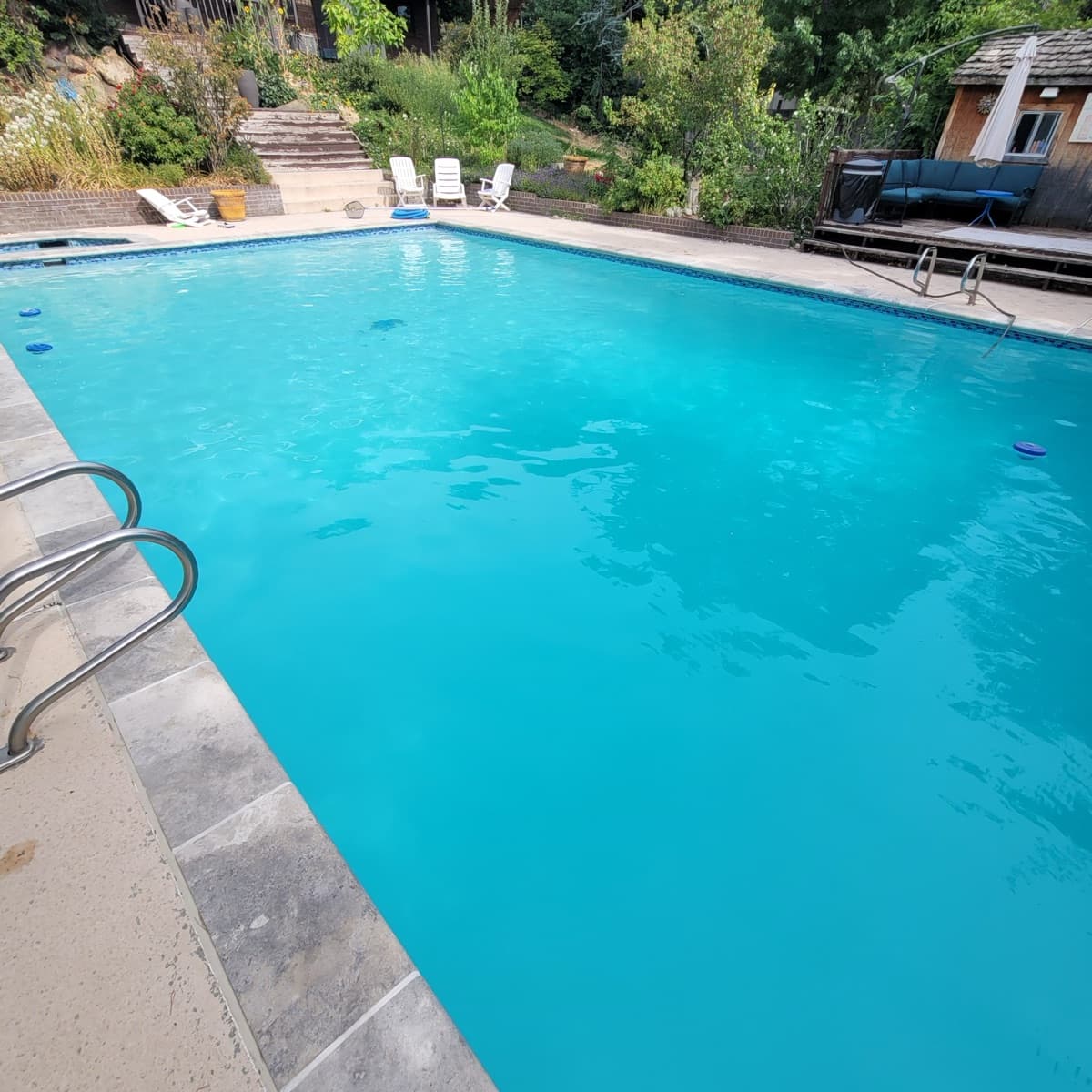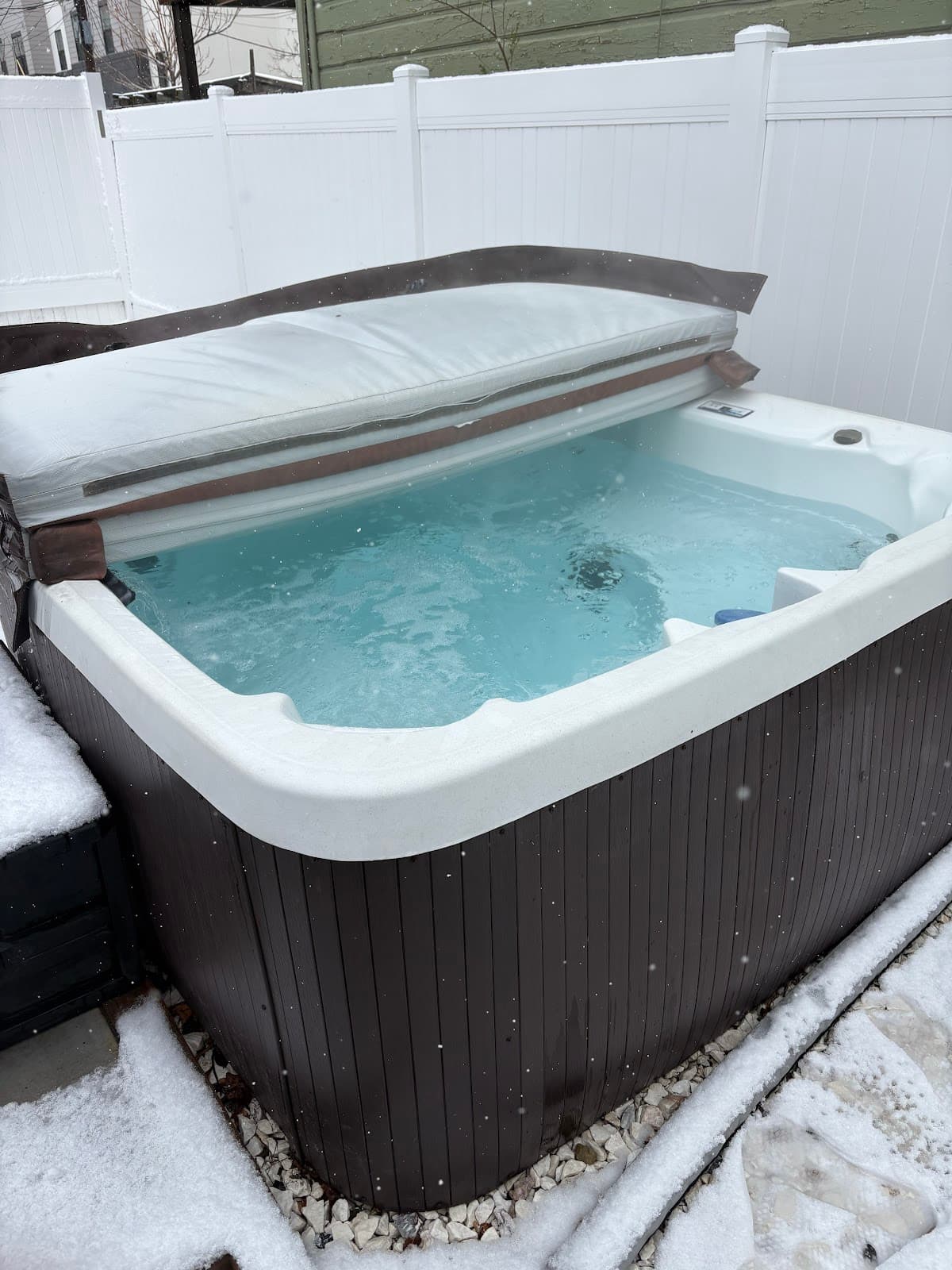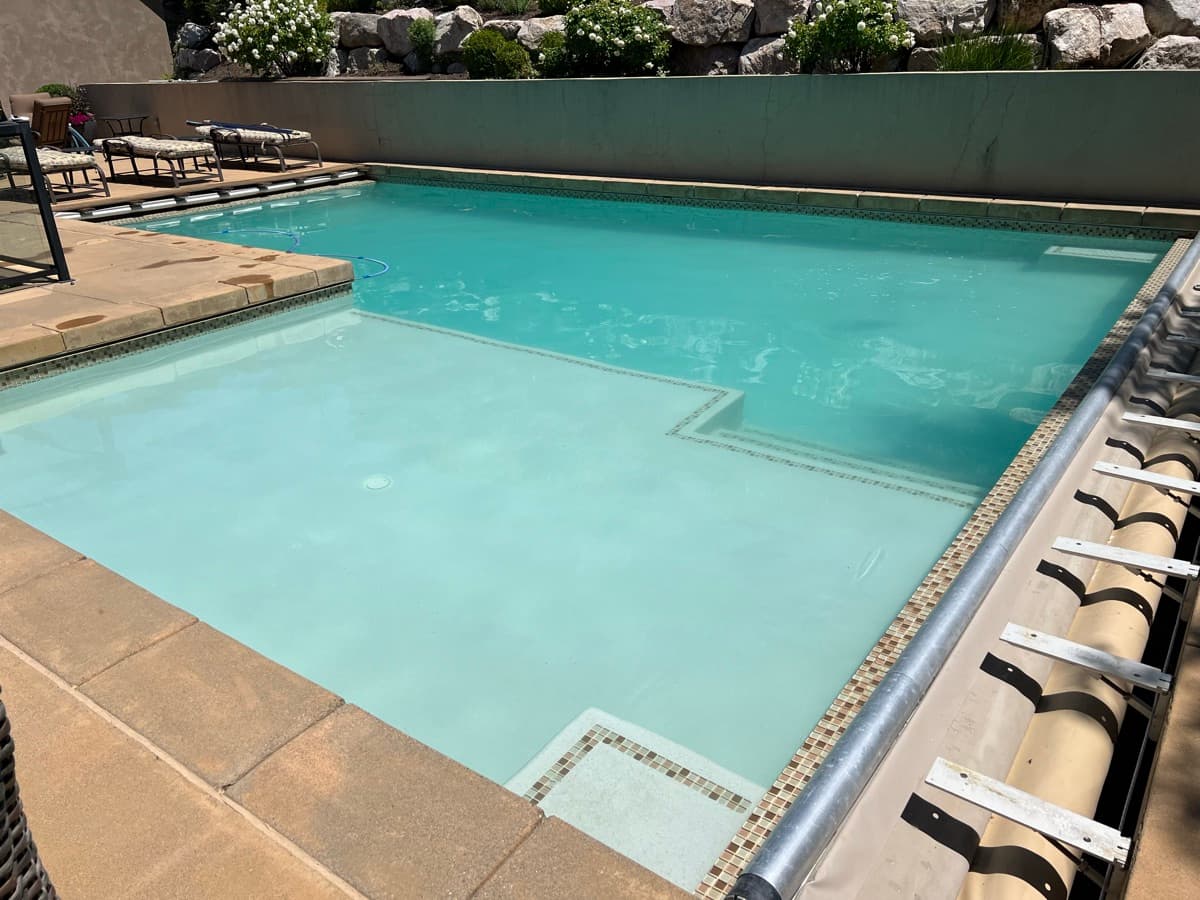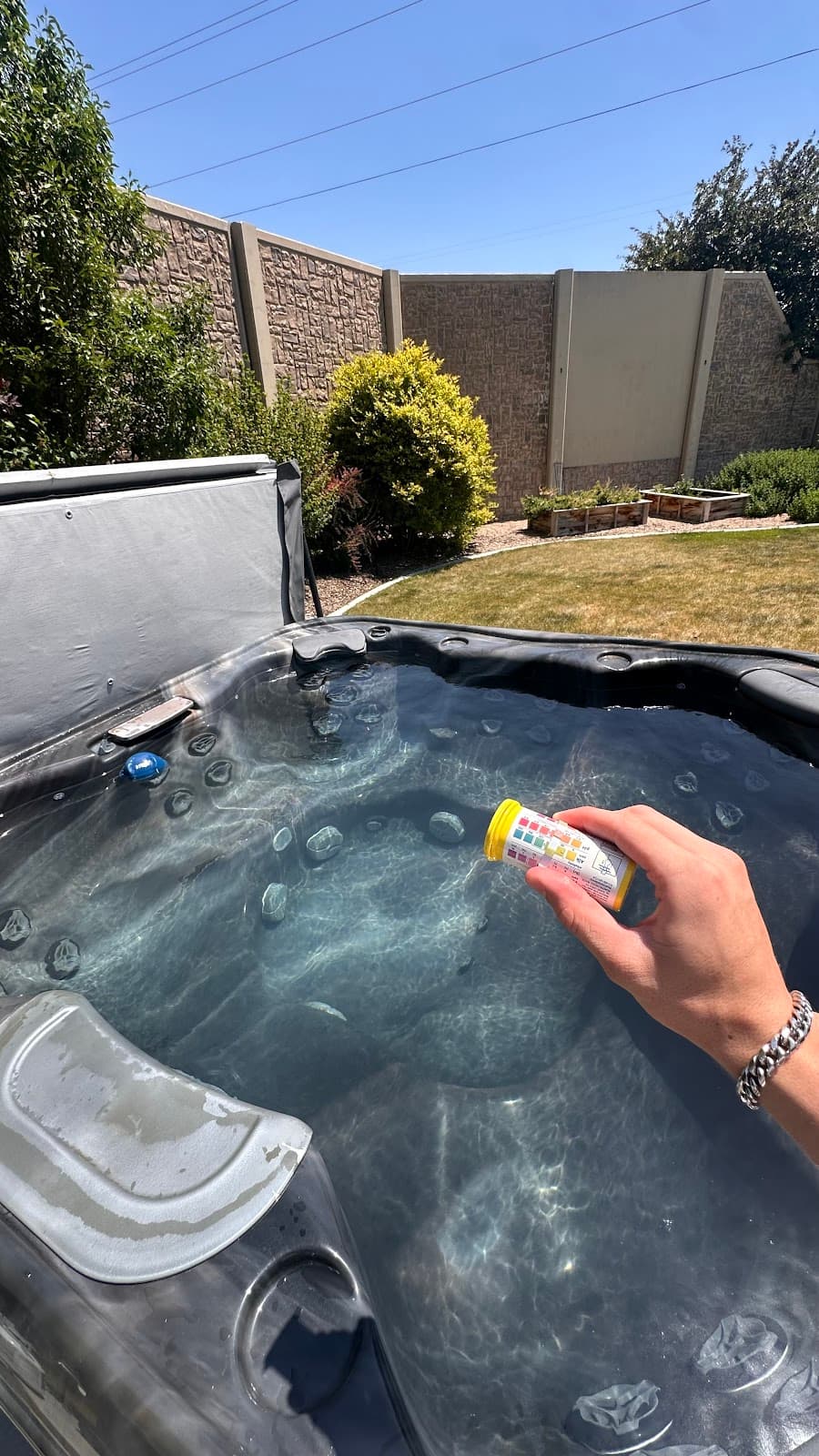
If you've ever noticed white, chalky buildup on your faucets, showerheads, or inside your kettle, you already know Utah has hard water. What you might not know is that this same hard water is one of the biggest challenges for pool and hot tub owners in the state.
How Hard Is Utah's Water?
Water hardness is measured in parts per million (ppm) of calcium carbonate. The ideal range for a pool is 200-400 ppm. The ideal range for a hot tub is 150-250 ppm. Utah's tap water often comes out of the faucet at 250-400+ ppm depending on your city — and that's before evaporation concentrates it further.
Cities along the Wasatch Front like Sandy, Draper, Riverton, and South Jordan tend to have particularly high calcium. Davis County cities like Layton and Kaysville are also high. The water from Utah Lake and the Jordan River system is naturally mineral-rich.
What Happens When Calcium Gets Too High
- White, crusty scale forms on your tile line, pool walls, and inside equipment
- Scale clogs filter cartridges and reduces flow
- Heater elements become coated and lose efficiency (your energy bill goes up)
- Salt cells (for salt water pools) get calcium buildup and fail prematurely
- Water looks cloudy even when sanitizer and pH are correct
- Pool surfaces feel rough instead of smooth
How We Manage It
You can't remove calcium from water with chemicals — you can only manage it. Here's what we do for our Utah customers:
First, we keep pH on the lower end of the acceptable range (7.2-7.4 instead of letting it drift to 7.6-7.8). Higher pH causes calcium to precipitate out of solution faster, which is what creates visible scale. Keeping pH tight is the single most impactful thing you can do.
Second, we use sequestering agents — chemicals that bind to calcium ions and keep them dissolved in the water instead of depositing on surfaces. These need to be added regularly, not just once.
Third, for hot tubs, regular draining (every 3-4 months) is essential. Every time water evaporates, the calcium stays behind and gets more concentrated. Fresh water resets the levels.
Can You Use a Water Softener?
This comes up a lot. Water softeners replace calcium with sodium, which technically solves the hardness problem. But for pools, softened water can be too low in calcium, which causes the water to become corrosive and actually attack your pool surfaces and equipment. The water "wants" calcium, so it'll pull it from your plaster, grout, or metal fittings.
For hot tub fills, a pre-filter that attaches to your garden hose works better. These filters remove some of the minerals without making the water corrosive. They're about $25 and good for a few fills.
The Real Solution
There's no magic fix for Utah's hard water. It's just part of owning a pool or hot tub here. The key is consistent management: tight pH control, regular sequestrant treatments, timely drains for hot tubs, and keeping an eye on the scale before it becomes a bigger problem. This is honestly one of the main reasons Utah pool owners benefit from professional service — the chemistry here is harder to get right than in most states.
Dealing with calcium scale? We can assess your situation and get your water chemistry back on track. Text or call (385) 228-2374.
Need Help With Your Pool or Hot Tub?
We offer free quotes for all pool and hot tub services across Davis, Salt Lake, Utah, and Summit Counties.